ZeMe
Role: Co-Founder-UX Designer
Brief
During the pandemic of 2020, the music industry ground to a halt. Venues closed and musicians were put on lockdown, destroying the only way many could earn a living. Many musicians began streaming their music on social media, but were just giving it away for free. How were they going to earn money during lockdown without a place where they could sell tickets to their shows online? During March of 2020, there were very few websites with that capability and their were key reasons for why it seems they hadn't succeeded. Having grown up in a musical family, the weight of what was happening hit home. With my background in UX and global connections, I thought that I could perhaps create a solution that would allow musicians to find a new way to reach their fans and earn a living in a period of historic uncertainty.
Process
First I contacted two people who I thought would be interested in joining me: Johan Bergman, a senior level full stack developer and Markus Fagerlund, a start-up and business coach who is a hobby musician. We started with some brainstorming sessions using affinity mapping to define what how we would tackle the problem. We wanted to become the best online venue for musicians but it needed to have a product that would be attractive enough that people would purchase tickets to the events. To test our initial assumptions I created two questionaires and began interviewing as many musicians as well as end-users as possible.
Problems
From interviewing countless musicians during March and April of different backgrounds, there were some clear things that stood out. The majority of the musicians were experts at playing music and that was what they were best at and wanted to do. They were hoping to have a simple solution that would help them get through the lockdown. They were all financially affected by the lockdown and were eager to begin playing again. 40 % had tried streaming their music, but most had done it using Facebook and Instagram and it was unpaid. They needed a solution as soon as possible to help them begin earning money for their music.
When interviewing live music concert lovers, there were some key things that came up in what motivates people to spend money to go to see live concerts. Many discussed that they like the immersive aspect of a live concert. There is a social aspect of going with friends, talking before and after the concert about it. There is a sense of community around seeing a band. Only 28% of those surveyed had paid to see a concert online and many felt that there needed to be more to the event than just watching it on their screen.
Solution
After reviewing the research and many brainstorming and affinity building workshops, we defined what we intended to have in our MVP. We wanted to have a live streaming site that had the capability to stream live concerts as well as have interactive VIP events that were more intimate. It was going to be imporant to have a paywall built into the product so that we could purchase tickets in the app. We decided that the project was going to be very expensive to build and that we would need financing in order to build it. Markus and I then put together our pitch deck to go out to finance our product. In the meantime, I worked to create the wire frames of the product so that we could more easily show investors the idea behind the product. Simultaneously, Johan worked on the backend of the product which we then began testing the functionality of.
DISCOVER PHASE
Researching, defining and prioritizing the requirements of the project.
Virtual Brain Storming
Because we started this project during the pandemic of 2020, we had to have most of our meetings virtually with weekly Zoom meetings and working with online products like Miro and Slack. It was important to get everyone on the same page, but at a distance. We created many mind-mapping virtual boards in Miro to help sort through how we would tackle the complexity of the product.
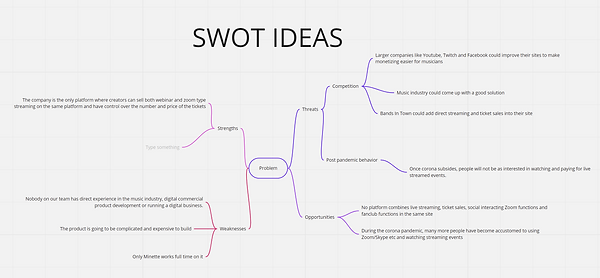
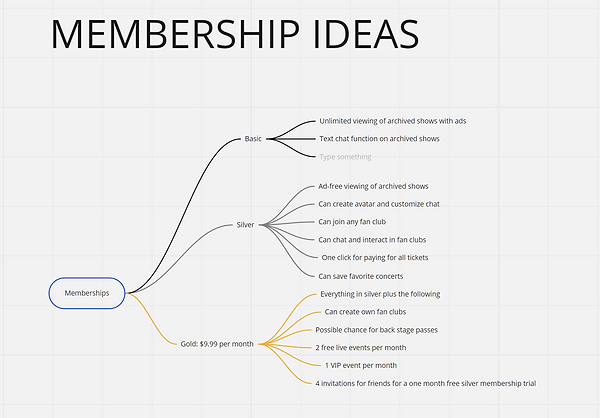
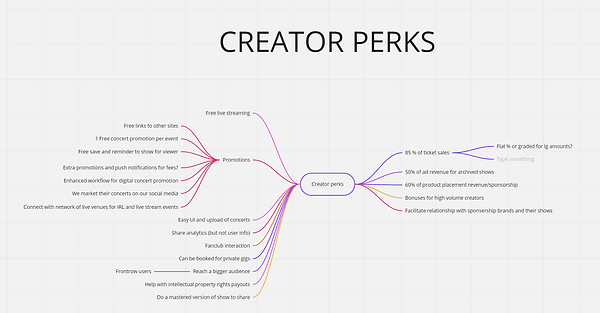
Affinity mapping
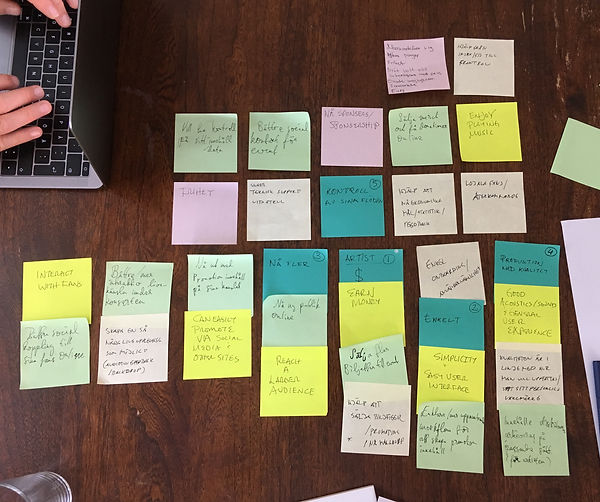
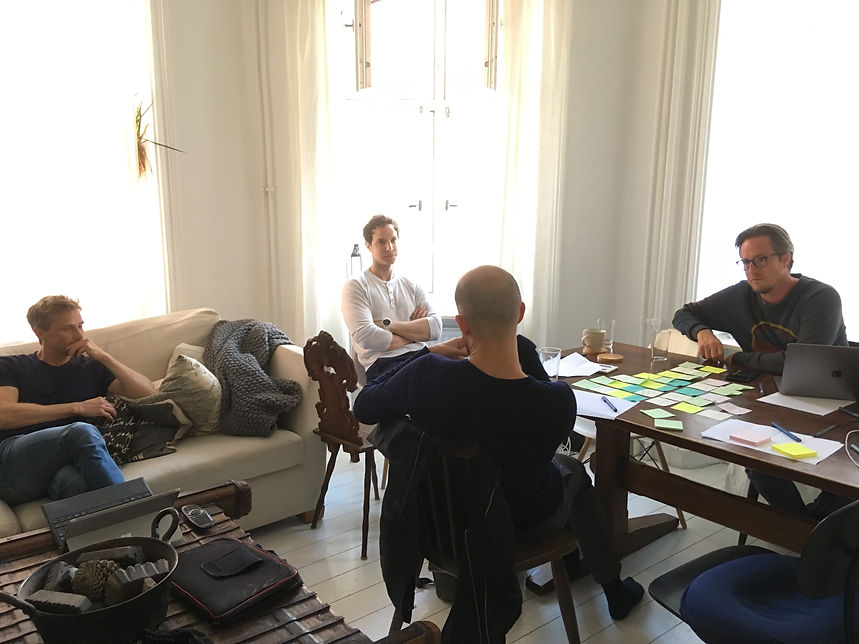
While most of our work was done virtually, we were able to meet IRL on a few occasions. We did affinity mapping excercises to help us define and decide what to include in our MVP.
Researching the competition
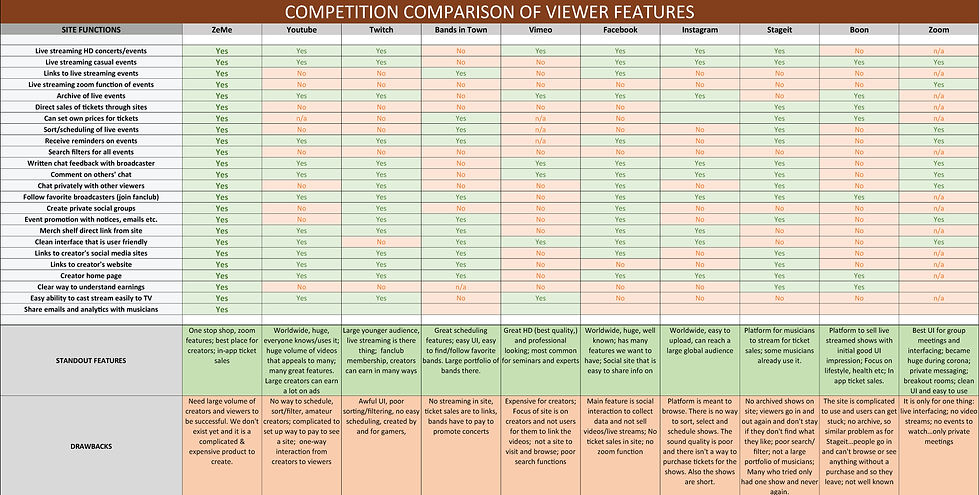
We also did a lot of research into the competition to figure out what was missing, what could be improved and to help us define the USP (Unique Selling Position) for our product. I put together a list of the features that the competition had to help us what would make us stand out and also did a comparison of their monetizing strategies.

User research-surveys
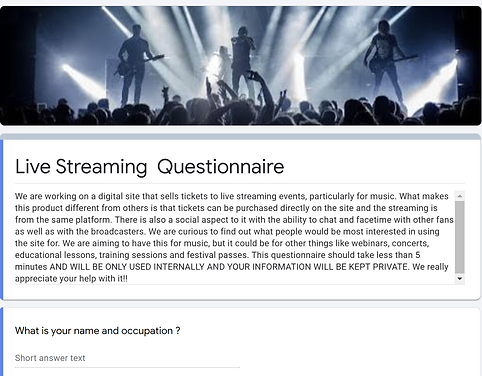
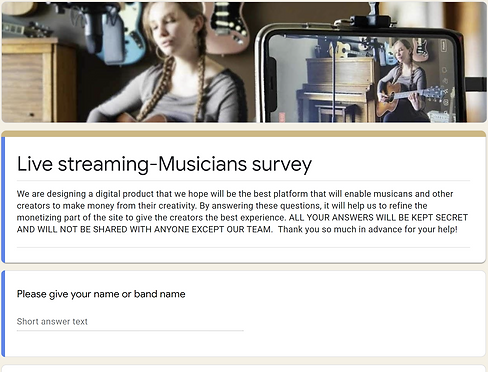
We had identified that we were to have two types of end users: musicians/performers and their audience/fans. I wanted to get as much feedback as possible from possible end users, so I created two different Google Forms and went into the field and interviewed as many as possible of these groups. This feedback from them both helped us form an idea of how we should structure the design.


CREATE PHASE
Ideating, interations, paper and digital wire frames
User Story Mapping
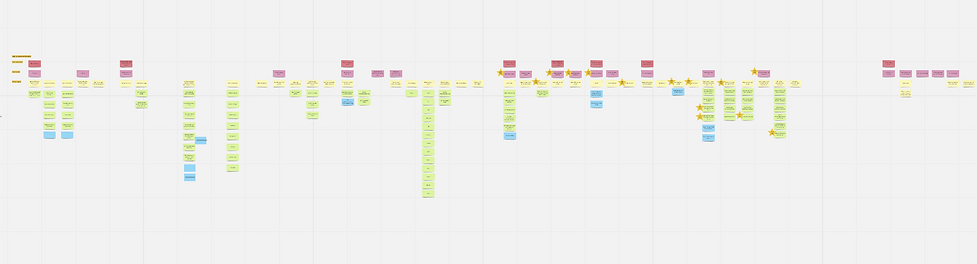
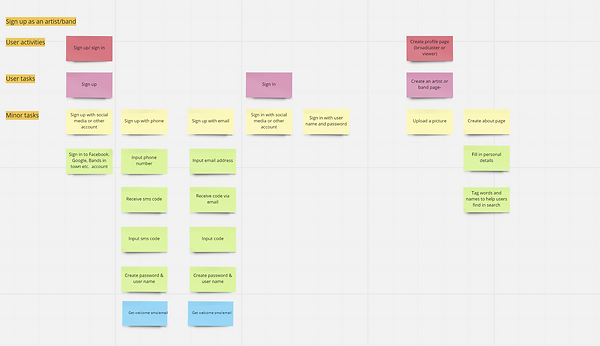
Because we were creating this product during the pandemic, we had to use a variety of virtual tools because our collaborative work in person was quite limited. We also had a large story mapping file on Miro to help us plan out the important features and steps of the pages for our MVP. We all could contribute virtually and in real time to it.
Crazy 8s
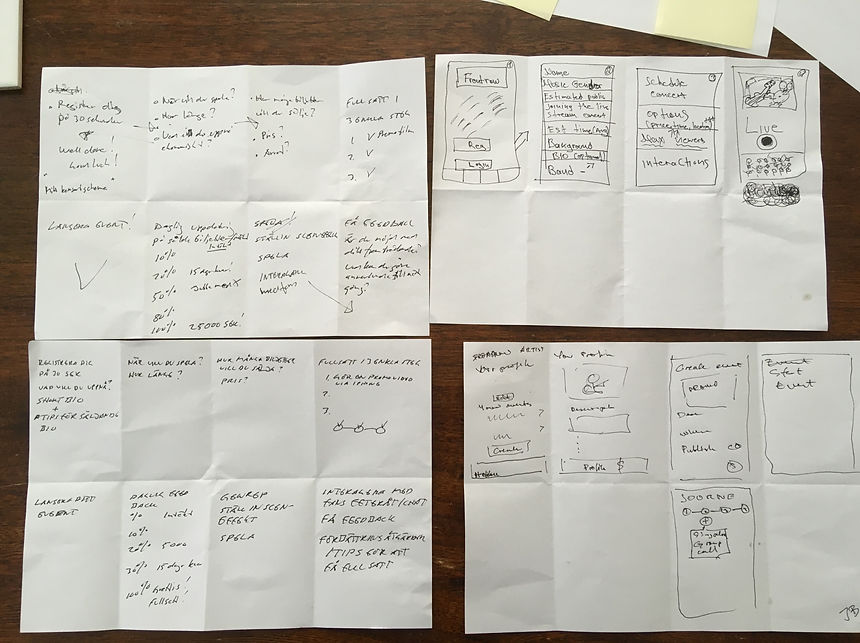
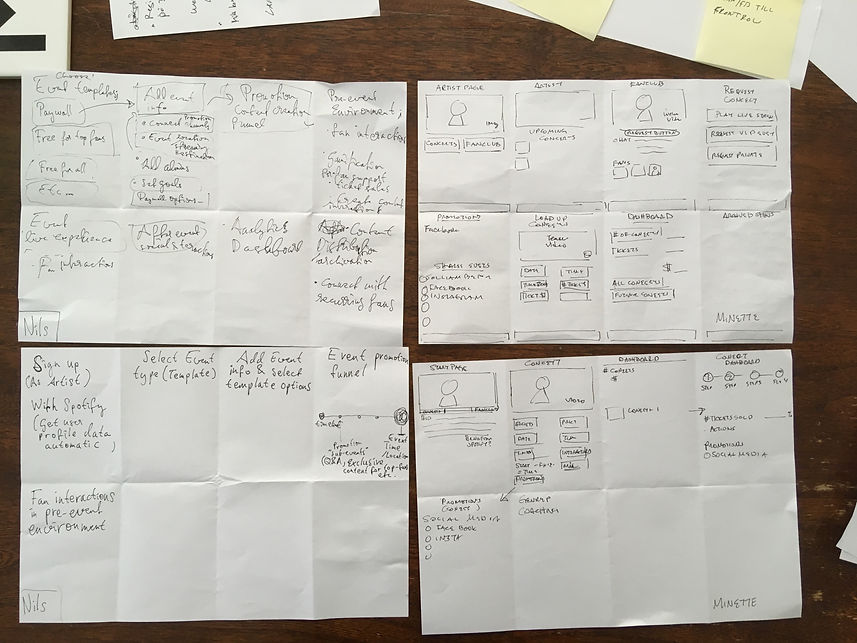
We were able to meet a few times to collaborate and have design sprints in person. One method we used was crazy 8s, where each person had to quickly draw up 8 options for various features we were trying to design and then present them to the rest of the group.
The Pitch Deck
We realized that we were going to need financing in order to build our product, so I worked on developing the pitch deck for investors while simultaneosly continuing to roll the product forward. We had several working names for the project and one of them was Frontrow.
Interactive wire frames
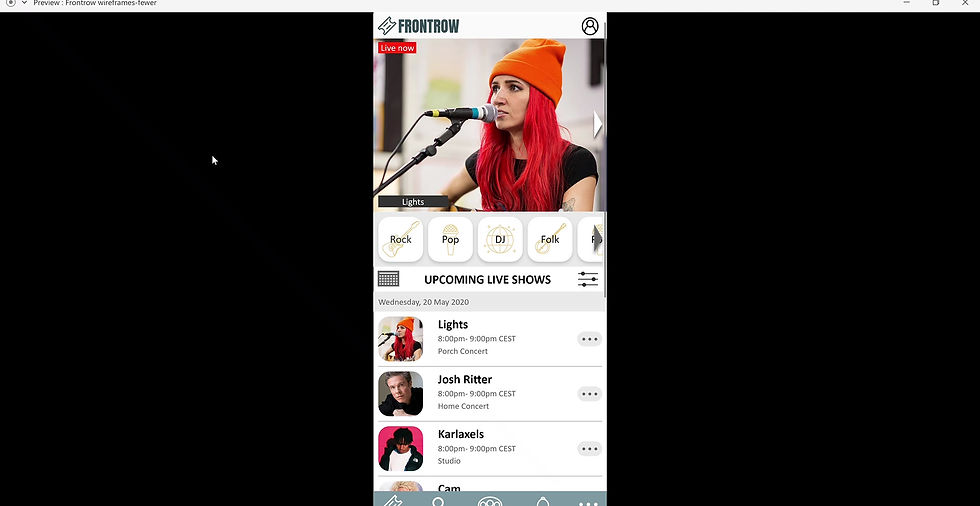
From all of the user research of what was needed as well as having done some design sprints with the team, I put together the first interactive wire frames that were meant to use to show investors what we were interested in designing. This is how they looked.